If your equine was born and/or living in Canada, CLICK HERE to register your equine in the CHIP if you have a MyEC account. CLICK HERE to create a MyEC account to register your equine in the CHIP.
About CHIP
The Canadian Horse Identification Program (CHIP) is a voluntary, national equine ID and traceability program open to all equines born and/or living in Canada regardless of age, breed, use or discipline. The CHIP protects the health, welfare, and identification of Canada’s equine population while promoting responsible ownership.
Every Horse Counts

The CHIP program proudly includes all equines from the Equidae/Horse Family, such as horses, donkeys, mules, hinnies, and zebras. Any equine born and/or living in Canada is eligible to enroll into the CHIP program regardless of age, breed, use or career. As more equines enroll the more we are able to learn about our Canadian herd and able to keep the equine industry strong and be sustainable in Canada. Further, this data provides valuable insights needed to support much needed Government programs to the sector.
The 124-000 Microchips – Promoting the Canadian Herd
The CHIP supports and promotes the use of ISO-compliant microchips and registration in the CHIP database as the premiere method of identification, especially when combined with a photo and/or description of the equine. The 124-000 microchips are unique to the program and available through authorized dealers such as Veterinarians and Breed Associations. The ‘124-000’ prefix designates that the microchip ID numbers are unique to Canada (124) under the ISO international standards 11784 and 11785, and that the number is in a series (000) allocated by the Canadian Food Inspection Agency (CFIA). Once implanted in the equine, the microchip is guaranteed for the life of the equine.
Our partner EIDAP has established themselves as a leader in companion animal identification and trusted partner for veterinarians, breeders, and animal welfare organizations. EIDAP is the supplier and distributor of the 124-000 equine microchips made by TROVAN, which are manufactured in Germany to the highest quality standards and are ICAR certified.
How to Get Your Equine Microchipped: Talk to your veterinarian to have your equine microchipped with the ‘124-000’ equine microchip or contact your breed registry so they can place their orders with EIDAP Inc.
BENEFITS of the CHIP Initiative
Protect your horse. Help protect every horse.
When individual equine records are combined into a centralized, national database, the value extends far beyond identifying an individual horse. Amalgamated data can become a strategic national resource for animal health, emergency preparedness, biosecurity, economic analysis, research, and government policy.
For the Canadian Horse Identification Program (CHIP), the opportunity is to connect information about equines, owners, premises, movements, and health-related events to create a more complete picture of Canada’s equine population.
The objective is not simply to know which horse is which, but to understand the equine population as a whole, where equines are located, how they move, what risks they face, and what services and resources the industry needs.
Ten major uses of amalgamated equine data
1. National equine population statistics
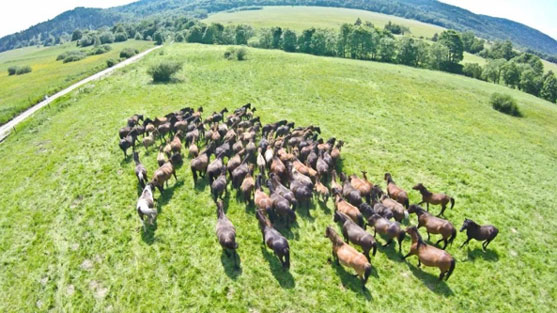
Establish a more accurate estimate of the number of horses, ponies, donkeys, mules and other equines in Canada, broken down by province, region, breed, age group and other available characteristics.
Uses: industry planning, regional service allocation, population trends, advocacy and government decision-making.
2. Disease surveillance and biosecurity
Identify where equines are located, track relevant movements and help assess potential exposure when a contagious disease is detected.
Uses: outbreak investigation, tracing exposed animals, targeted testing, quarantine planning and coordinated disease response.
3. Emergency and disaster preparedness
Combine equine and premises records with wildfire perimeters, floods, severe storms and other hazard information to estimate how many equines and facilities may be affected.
Uses: evacuation priorities, emergency stabling, feed and water distribution, rescue coordination and post-disaster recovery.

4. Movement and transportation analysis
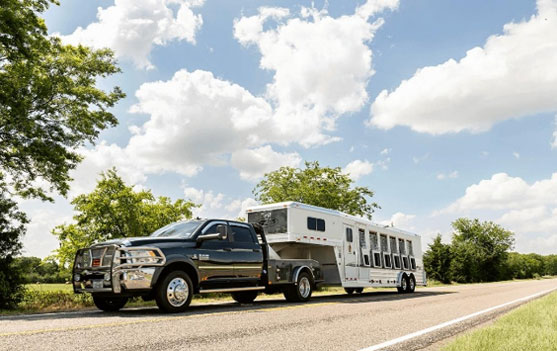
Aggregate reported movements to understand movement patterns between premises, provinces, competitions, sales, breeding facilities and other destinations.
Uses: disease-risk assessment, transport planning, movement compliance and identification of high-connectivity locations.
5. Breeding and population demographics
Analyse recorded birth years, breeds, sex, breeding records where available, and geographic distribution to understand population changes and breeding trends.
Uses: breeding program planning, conservation of rare breeds, foal population estimates and long-term equine demographic research.

6. Veterinary services and animal health research
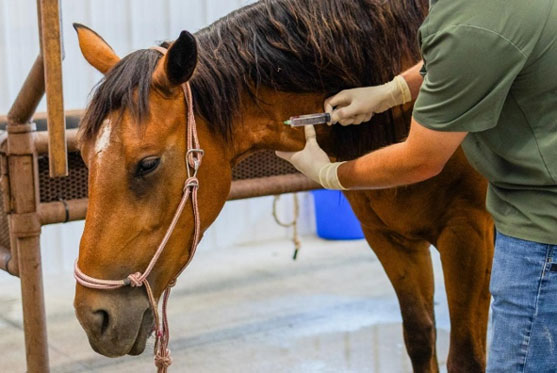
With appropriate consent and data-sharing arrangements, aggregated records can help assess regional veterinary service needs and support research into equine health and welfare.
Uses: service-gap analysis, research recruitment, health-program planning and identifying areas for additional veterinary capacity.
7. Economic contribution and industry planning
Link equine population estimates with suitable external economic studies and industry data to understand regional demand for feed, veterinary care, farriers, transportation, boarding, equipment and related services.
Uses: economic impact assessments, employment estimates, infrastructure planning and evidence for government investment.

8. Identification, ownership and recovery
Link a unique equine identifier with current registration details and ownership information, subject to appropriate access controls.
Uses: identification of lost or stolen horses, ownership verification, recovery after disasters and resolution of identification discrepancies.
9. Government policy and regulatory planning
Provide evidence to federal and provincial/territorial governments about equine numbers, distribution, identification coverage and traceability gaps.
Uses: policy development, regulatory assessments, program evaluation, funding proposals and coordinated national standards.

10. Industry intelligence and trend forecasting
Track changes in the equine population and participation over time, combining CHIP data with suitable industry, competition, veterinary and economic datasets.
Uses: forecasting demand, measuring program adoption, identifying emerging risks and supporting evidence-based industry decisions.
For Owners
Your Horse Matters. Your Participation Makes a Difference.
Every horse has a story, an owner and a place in Canada’s equine community. Ensuring your horse is properly identified, and its information is kept up to date helps protect what matters to you—and contributes to protecting equines across Canada.
The Canadian Horse Identification Program (CHIP) is building a national resource for equine identification and traceability. By registering your equine and maintaining accurate information, you help create a more complete picture of Canada’s herd population.
Why does this matter to you and your equine?
- Identification and security: Establish a reliable identification record that can help confirm your equine’s identity and assist with recovery if your equine is lost, stolen or displaced during an emergency.
- Emergency preparedness: Help improve the information available to support planning and response during wildfires, floods, severe weather and other emergencies.
- Animal health and biosecurity: Contribute to a stronger traceability system that can help authorized organizations investigate disease risks and coordinate responses.
- A stronger equine industry: Help build a more accurate understanding of Canada’s equine population, supporting research, industry planning and informed government decisions.
- A lasting record: Help maintain an identification record that can follow your equine throughout its lifetime, even as ownership changes.
- Compliance: In some countries, microchipping is required by law, specific breed registries or sport organizations. By using the ‘124-000’ microchip it ensures you are meeting current international standards for microchips in these countries and meeting unique ID requirements as needed by regulations or organizations.
One equine. One reliable record. A stronger national equine community.
When equine owners participate, individual records become part of something bigger: a national resource that can help protect horses, support owners and strengthen the future of Canada’s equine industry.
Register your equine with CHIP. Keep your information current. Because every horse counts.
Register Your Equine
Registration is easy and it’s free. All equines born and/or living in Canada are eligible to be enrolled. Your equine doesn’t need a microchip to be enrolled, but the CHIP highly recommends one for identification. Otherwise, a description and photo are acceptable. Equines with other numbered microchips are eligible to be enrolled. And owners do not need to be a member of a sports organization (such as EC) or breed association either.
If your equine has been recently microchipped with a 124-000 microchip, your vet or breed association will have sent you an invitation by email to register your equine in the CHIP database. If you have not received this invitation, and have the microchip number, you can still proceed with registration.
REGISTER HERE if you already have a MyEC account
REGISTER HERE to create a MyEC account to register your equine in the CHIP
Register Your Equine
Registration is easy and it’s free. All equines born and/or living in Canada are eligible to be enrolled. Your equine doesn’t need a microchip to be enrolled, but the CHIP highly recommends one for identification. Otherwise, a description and photo are acceptable. Equines with other numbered microchips are eligible to be enrolled. And owners do not need to be a member of a sports organization (such as EC) or breed association either.
If your equine has been recently microchipped with a 124-000 microchip, your vet or breed association will have sent you an invitation by email to register your equine in the CHIP database. If you have not received this invitation, and have the microchip number, you can still proceed with registration.
Q & A
Microchips and registration in the CHIP database can quickly reunite equines with their owners in the event of accidents, theft or natural disasters compared to using physical descriptions or relying on tattoos or brands. They can also be used to monitor animal movement, trace animals during disease outbreaks, and prevent fraud at competitions. Microchipping provides a quick form of identification when scanned by veterinarians, breeders, buyers, officials, etc. It is often done only once in an equine’s life, and during spring or fall vaccinations, or shortly after an equine is born. Microchips are paired with a database to identify an equine’s owner and place of residency, and other important information.
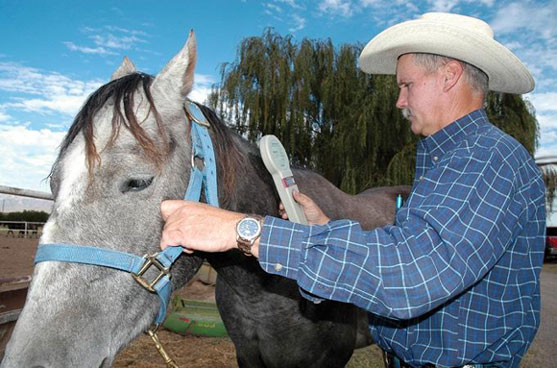
Microchips are small, electronic circuits that use radio-frequency identification (RFID) technology. Each microchip has a unique 15-digit number that can be read by a hand-held scanner. They are not a GPS and cannot confirm location of an equine.
A microchip is about the size of a grain of rice and is implanted into the equine’s upper lip or in the nuchal ligament on the left side, about halfway up the neck between the withers and poll – this is the international standard for implant location. It is important to check with your breed registry and/or sport organization to confirm preferred or mandated implantation site.
You can request a ‘124-000’ microchip for your equine from a veterinarian or breed registry. Your vet will make the arrangements with you for the implant appointment. Your equine must have been born in Canada and/or reside in Canada. If your veterinarian or breed registry does not carry the 124-000 then they can reach out to chip@equestrian.ca to sign up as an authorized dealer.
The cost of microchipping varies from vet to vet as there may be fees associated with travel, sedation, implantation, etc. besides the cost of the actual ‘124-000’ microchip. The fee on average is $100 per equine which is considered very low given the huge benefits. No fees are associated with registering your equine in the CHIP program.
No, some microchips already in equines are 10 digits long and do not follow the International Organization for Standardization (ISO). Non-compliant microchips cannot always be scanned. To be compliant with international standards, they must contain 15 digits and follow ISO 11784 and 11785 standards. The ‘124-000’ microchips follow these standards. Other microchips on the market may not be ‘equine exclusive’ like the 124-000s, or do not follow the ISO standards which may present problems scanning and reading the numbers leading to the equine needing to be re-chipped.
Your data is stored in Canada including the back-up data. EC has monitoring services to enhance the IT security to ensure that they can stay on top of any cyber attacks on the CHIP database. Owners have the option to accept or decline consents for sharing information about ownership and equines. The CHIP Privacy Policy can be found in the consents section. We encourage users to read the Privacy Policy to understand why data may be shared, and other important information.
PIDs can be obtained through provincial and territorial offices. Click on this PID infographic for more information.
No they are not. They are two separate programs but connected. This means that if you have an EC Sport Horse Recording you can seamlessly add your horse to the CHIP registry. Horses that have the EC Sport Horse Recording will have the EC logo beside the name of the horse on your MyEC home page. Those horses that are registered in the CHIP database will have the CHIP Logo. Those that are in both databases have both logos. Horses in the CHIP database can also seamlessly have an EC Sport Horse Recording provided the equestrian is a Sport Licence Holder (SLH). There are fees associated with having an EC Sports Licence and an EC Sport Horse Recording, but no fees associated with CHIP.
Although the registration pages look similar for a sport horse recording and the CHIP registration, there are still differences in the information collected relevant to each purpose.